
Introduction
If you’ve ever wondered whether turkeys lay eggs like chickens do, you’re not alone. Many people associate turkeys mainly with holiday dinners, so it’s easy to forget that they’re also egg-laying birds. In fact, turkeys have a fascinating reproductive cycle that’s quite different from what most people expect. Understanding how, when, and why turkeys lay eggs can give you a deeper appreciation for these remarkable birds — whether you’re a curious reader, a backyard farmer, or simply an animal enthusiast.
Understanding Turkey Reproduction Basics
Turkeys reproduce through a natural mating process similar to other birds, but their breeding habits and timing make them unique. Both wild and domestic turkeys follow seasonal patterns, meaning they usually mate and lay eggs during spring when daylight hours increase. The male turkey, called a tom, displays his feathers and makes gobbling sounds to attract females, known as hens.
Once mating occurs, the hen begins producing eggs over several weeks. She doesn’t lay all her eggs at once — instead, she lays one egg per day until her clutch is complete, usually containing 10 to 14 eggs. After the last egg is laid, the hen starts incubating them, keeping them warm and protected until they hatch. This natural rhythm of reproduction ensures that the poults (baby turkeys) are born in warmer months, giving them the best chance to survive.
When and How Often Turkeys Lay Eggs
Turkeys typically lay eggs during the spring season, when daylight increases and temperatures become mild. This period naturally triggers their reproductive instincts. In most cases, wild turkeys begin laying in late March or early April, while domestic turkeys may start a bit earlier if they’re kept under controlled lighting and temperature conditions.
A healthy turkey hen usually lays one egg per day, though she might occasionally skip a day. It takes her about two weeks to complete a full clutch, which generally contains between 10 and 14 eggs. Once the clutch is complete, she stops laying and focuses entirely on incubation. Unlike chickens that can produce eggs year-round with proper care, turkeys lay only seasonally — typically once a year. However, under farm management or extended light exposure, domestic hens can sometimes produce a second, smaller clutch later in the year.
What Turkey Eggs Look Like
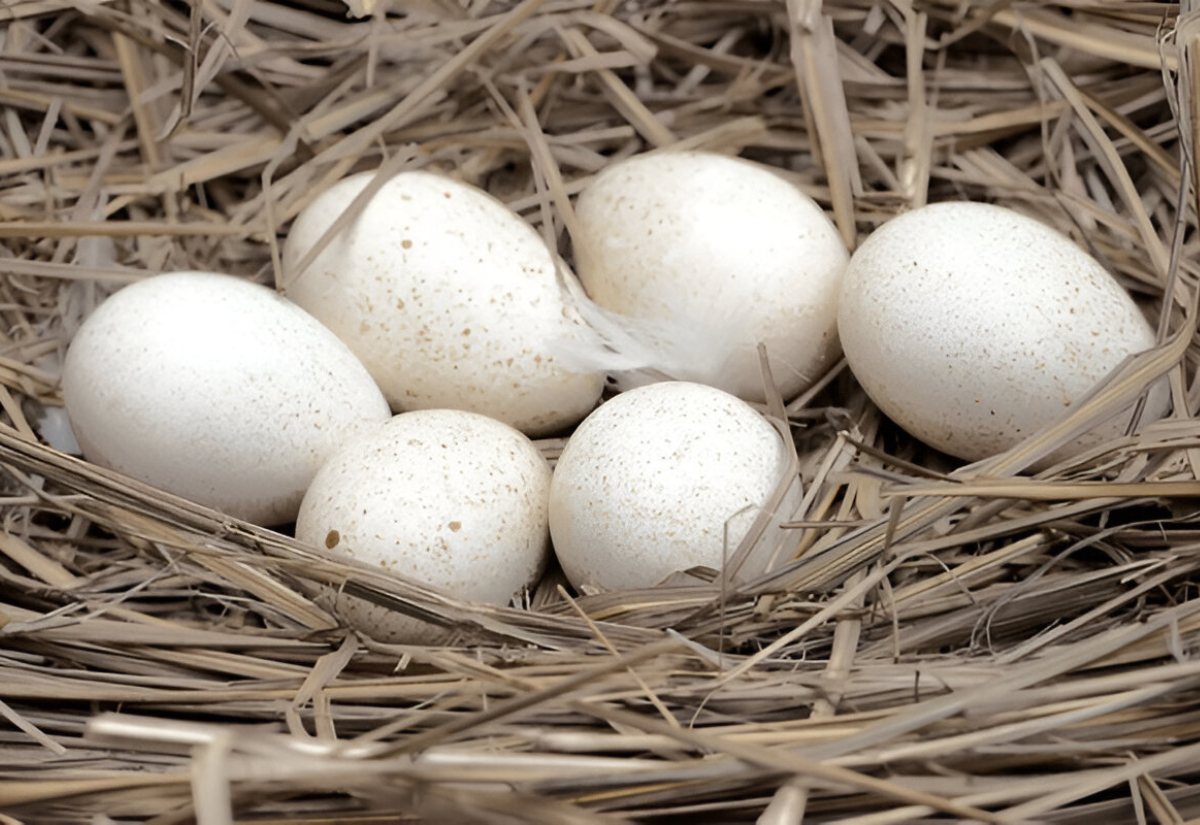
Turkey eggs are noticeably larger than chicken eggs, with an average length of about 2.5 inches and a slightly pointed shape. Their shells are cream to light tan in color and covered with small brown speckles, giving them a distinct, rustic appearance. The texture is also thicker and slightly rougher than that of a chicken egg, which helps protect the developing embryo in the wild.
Inside, the yolk of a turkey egg is richer and more vibrant in color, containing a higher concentration of nutrients. In fact, turkey eggs are slightly more caloric than chicken eggs but also offer more protein, iron, and healthy fats per serving. Their taste is quite similar — mild and creamy — but the denser texture makes them ideal for baking or hearty breakfast dishes. Because of their rarity and robust nutrition, turkey eggs are often seen as a delicacy among poultry enthusiasts.
Where Turkeys Lay Their Eggs in the Wild and on Farms
Wild turkeys are careful and strategic when it comes to choosing nesting spots. They usually select secluded areas with plenty of cover — such as tall grass, bushes, or wooded edges — to protect their eggs from predators. The hen builds a shallow nest, often just a small depression in the ground lined with leaves, twigs, and feathers. Once she begins laying, she visits the nest daily to add one egg at a time until her clutch is complete. During this period, she stays discreet, keeping her movements quiet and hidden to avoid drawing attention.
Nesting Behavior of Domestic Turkeys
Domesticated turkeys, raised on farms, rely on a more controlled environment for laying eggs. Farmers provide them with clean, comfortable nesting boxes or enclosed spaces filled with straw or shavings. These nests are designed to mimic the security and warmth of a natural habitat while allowing easy egg collection. In well-managed conditions, domestic hens may lay more consistently because farmers can regulate light exposure and nutrition to encourage healthy egg production. Unlike wild hens that lay only once per year, domestic turkeys can sometimes lay multiple clutches if conditions remain ideal.
Do People Eat Turkey Eggs?
Yes, turkey eggs are completely edible — and many people who have tried them describe the taste as rich, creamy, and slightly more flavorful than chicken eggs. Their larger size and thicker shell make them ideal for baking or special dishes where a fuller egg flavor is desired. Nutritionally, they’re an excellent source of protein, vitamins, and minerals, offering similar health benefits to chicken eggs.
Despite being perfectly safe and tasty, turkey eggs are rarely found in grocery stores. The main reason is practicality. Turkeys produce far fewer eggs than chickens and only lay seasonally, making large-scale egg production inefficient. From a farming perspective, it’s more profitable to raise turkeys for meat rather than for their eggs. Additionally, cultural habits play a role — most consumers are simply more familiar with chicken eggs, so the demand for turkey eggs remains low. As a result, they’re considered a niche or farm-to-table specialty rather than a supermarket staple.
Turkey Egg Incubation and Hatching Process
Once a turkey hen completes her clutch, she begins the incubation process to keep her eggs warm and protected. Incubation typically lasts about 28 days, during which the hen rarely leaves the nest except to eat or drink briefly. She carefully turns the eggs several times a day using her beak and body to ensure even warmth and proper development. Temperature and humidity are critical during this stage — too much fluctuation can affect hatching success.
As the 28-day mark approaches, the poults (baby turkeys) start to peck through the shell using their small egg tooth. The hatching process can take several hours, and once they emerge, they remain under their mother’s warmth until strong enough to move around.
Natural Incubation vs. Artificial Incubation
In the wild or in free-range settings, hens handle the incubation naturally. They rely on body heat, instinct, and environmental shelter to maintain the right conditions. However, on farms, artificial incubators are often used to improve hatch rates and efficiency. These machines regulate temperature, humidity, and egg rotation automatically, reducing the risk of loss. While natural incubation allows hens to bond with their poults from the start, artificial methods are preferred in commercial or breeding environments where precision and productivity matter most.
Common Myths About Turkey Egg Laying
There are several misconceptions about turkey egg laying that often lead to confusion. One common myth is that turkeys don’t lay eggs at all — which is false. Like all birds, female turkeys naturally lay eggs during their breeding season. They simply do so less frequently than chickens, which makes their eggs less visible in everyday life.
Another widespread belief is that turkeys only lay eggs in captivity. In reality, wild turkeys lay eggs every spring, choosing hidden nesting sites in forests, grasslands, or fields. Their eggs are just harder to find because hens are extremely cautious and secretive while nesting.
Some people also think turkey eggs are unsafe to eat, but that’s not true either. They’re just as nutritious and safe as chicken eggs when handled properly. These myths persist mostly because turkey eggs aren’t commercially available, creating the false impression that they’re unusual or unfit for consumption. In truth, turkeys are natural egg layers — just with different habits and priorities than other poultry.
Conclusion
Turkeys may not be as well-known for their eggs as chickens, but they are indeed steady and capable layers within their natural breeding season. From their carefully hidden nests in the wild to the managed environments on farms, turkey hens follow a fascinating reproductive cycle that ensures the survival of their young.
Their eggs — larger, speckled, and rich in nutrients — reveal another side of these birds that many people overlook. While turkey eggs aren’t a common sight in grocery stores, they remain an important part of the species’ natural rhythm and a unique culinary treat for those lucky enough to try them. Understanding how and why turkeys lay eggs not only clears up common myths but also highlights the remarkable diversity of life within the bird world.
FAQs
1. How many eggs does a turkey lay in a year?
A turkey hen usually lays one clutch per year, producing around 10 to 14 eggs in total. In managed farm conditions with extended light exposure, some hens may produce a second smaller clutch later in the year.
2. What time of year do turkeys usually lay eggs?
Turkeys typically lay eggs in the spring, beginning in late March or early April when the days become longer and temperatures warm up. This timing helps ensure that the poults hatch during the safest and most food-rich months.
3. Are turkey eggs safe and healthy to eat?
Yes, turkey eggs are completely safe and highly nutritious. They contain more protein, vitamins, and healthy fats than chicken eggs, offering a richer flavor and texture.
4. Why don’t we see turkey eggs sold in grocery stores?
Turkeys lay far fewer eggs than chickens, and their seasonal laying habits make large-scale egg production impractical. Most farmers raise turkeys for meat instead, which is why turkey eggs are rarely available commercially.
